

Wisdom Teeth Extraction
Comfortable, Carefully Planned Wisdom Tooth Removal
Wisdom teeth, also known as third molars, are the last teeth to develop and usually appear during the late teens or early twenties. While some wisdom teeth erupt normally and function without problems, others may become impacted, partially erupted or difficult to clean.
When a wisdom tooth causes pain, infection, gum inflammation, decay or damage to neighbouring teeth, wisdom tooth extraction may be recommended.
At Invisalign Smile Centre, wisdom tooth removal is planned following a detailed clinical examination and appropriate dental imaging to understand the position of the tooth and its relationship with surrounding structures.
When Is Wisdom Tooth Extraction Recommended?
Wisdom teeth may need to be removed when they cause or are likely to cause:
• Recurrent pain or discomfort
• Swollen or inflamed gums
• Partially erupted wisdom teeth
• Impacted wisdom teeth
• Recurrent infection around the tooth
• Food getting trapped around the wisdom tooth
• Tooth decay that is difficult to treat
• Gum disease around the wisdom tooth
• Damage or decay affecting the neighbouring tooth
• Cysts or other pathology associated with the tooth
• Crowding or other specific orthodontic considerations
Not every wisdom tooth needs to be removed. A dental examination helps determine whether monitoring or extraction is appropriate.
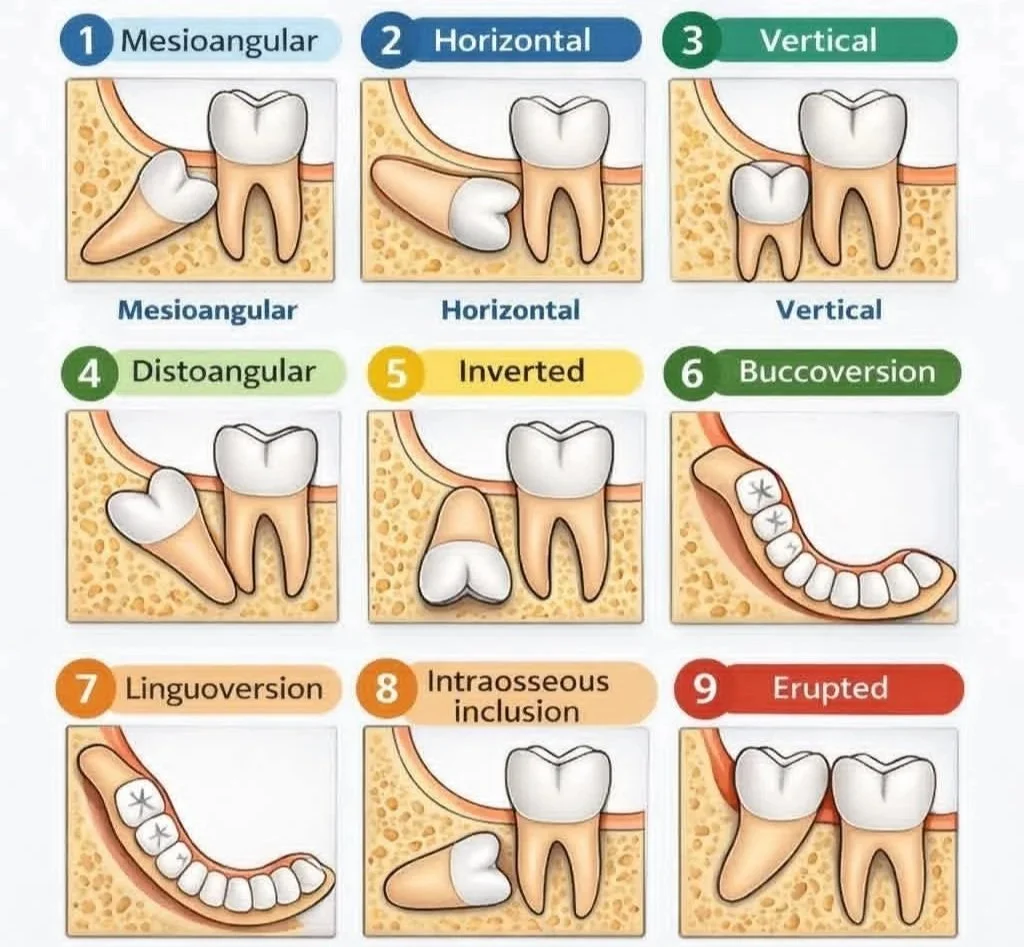
What Is an Impacted Wisdom Tooth?
A wisdom tooth is considered impacted when it cannot erupt into its normal position because of limited space, its angle of eruption or obstruction from surrounding structures.
Common types include:
Symptoms of Problematic Wisdom Teeth
You may need a dental evaluation if you experience:
• Pain at the back of the jaw
• Swollen or tender gums
• Difficulty opening the mouth
• Pain while chewing
• Bad taste or bad breath
• Repeated gum infections
• Food trapping behind the last molar
• Swelling around a partially erupted tooth
• Pain radiating towards the ear or jaw
• Difficulty keeping the area clean
Some impacted wisdom teeth may cause no symptoms at all, which is why dental examination and imaging can be important.
How Is Wisdom Tooth Extraction Planned?
01. Clinical Examination
Your dentist examines the wisdom tooth, surrounding gums and neighbouring teeth.
02. Dental Imaging
An X-ray is commonly used to assess the position of the tooth. In more complex cases, CBCT imaging may be recommended to evaluate the tooth's relationship with surrounding anatomical structures.
03. Treatment Planning
The complexity of the extraction is assessed based on:
• Tooth position
• Root shape
• Depth of impaction
• Available space
• Bone coverage
• Relationship to surrounding structures
04. Anaesthesia
The extraction is performed under appropriate local anaesthesia to keep the procedure comfortable.
05. Tooth Removal
Depending on the position of the wisdom tooth, it may be removed as a straightforward extraction or through a minor surgical procedure.
06. Post-Operative Care
You will receive instructions regarding oral hygiene, diet, medication and activity during the initial healing period.
Simple vs Surgical Wisdom Tooth Extraction
Simple Extraction
A wisdom tooth that has erupted sufficiently and can be accessed easily may sometimes be removed using a conventional extraction technique.
Surgical Extraction
An impacted or partially erupted wisdom tooth may require a surgical approach. This can involve accessing the tooth through the gum and, where necessary, carefully removing a small amount of surrounding bone or dividing the tooth into sections for controlled removal.
The approach depends entirely on the individual tooth and its position.
Is Wisdom Tooth Removal Painful?
Wisdom tooth extraction is performed under local anaesthesia, which numbs the treatment area during the procedure.
Some discomfort, swelling and jaw stiffness can occur after extraction, particularly following surgical removal. These symptoms generally form part of the normal healing process.
Your dentist will provide appropriate post-operative instructions and medication when indicated.
Recovery After Wisdom Tooth Extraction
Recovery varies depending on the complexity of the extraction and individual healing.
During the initial recovery period, you may be advised to:
• Follow the prescribed medication instructions
• Eat softer foods initially
• Avoid smoking or tobacco
• Avoid vigorous rinsing immediately after extraction
• Maintain careful oral hygiene around the area
• Avoid strenuous activity for the period recommended by your dentist
• Attend follow-up appointments if advised
Swelling is often most noticeable during the first few days and gradually improves.
What Should You Avoid After Wisdom Tooth Removal?
To support healing, your dentist may advise you to avoid:
• Smoking and tobacco
• Alcohol during the initial healing period
• Vigorous rinsing
• Drinking through a straw
• Excessively hot foods and beverages immediately after surgery
• Touching or disturbing the extraction site
• Strenuous exercise during the early recovery period
Your dentist will provide instructions specific to your procedure.
Why Choose Us for Wisdom Tooth Extraction?
If you are looking for wisdom tooth extraction near me, tooth extraction near me or teeth extraction near me, Invisalign Smile Centre is in JP Nagar 7th Phase, Bengaluru. We assess each wisdom tooth before recommending simple or surgical extraction.
Detailed Treatment Planning
Each wisdom tooth is assessed individually before extraction.
Advanced Dental Imaging
Appropriate imaging helps evaluate tooth position and surrounding anatomical structures.
Experienced Dental Team
Our qualified dental professionals manage both straightforward and surgically complex dental cases.
Patient-Centred Care
We focus on clear communication, appropriate anaesthesia and comfortable treatment.
Comprehensive Dental Support
From diagnosis and imaging through extraction and post-operative care, your treatment is managed as part of a comprehensive dental care pathway.
Frequently Asked Questions
Does every wisdom tooth need to be removed?
No. Healthy wisdom teeth that are properly positioned, functional and easy to maintain may not require extraction. Your dentist will assess the individual tooth.
At what age should wisdom teeth be removed?
There is no universal age for removal. The decision depends on the position of the tooth, symptoms, oral health and potential risks or complications.
Can an impacted wisdom tooth be removed?
Yes. Impacted wisdom teeth can often be removed surgically after appropriate examination and imaging.
How long does wisdom tooth extraction take?
The duration varies considerably depending on whether the tooth is erupted, partially erupted or deeply impacted, as well as its root anatomy and position.
How long does it take to recover?
Initial recovery generally occurs over several days, while complete healing of the extraction site takes longer. Recovery varies from person to person and depends on the complexity of the procedure.
Can I remove all four wisdom teeth at once?
In selected patients, multiple wisdom teeth can be removed during the same treatment session. Whether this is appropriate depends on your clinical situation and treatment plan.
Can wisdom teeth cause damage to neighbouring teeth?
Impacted or partially erupted wisdom teeth can sometimes contribute to decay, gum problems or damage to the adjacent second molar. An examination and appropriate imaging can help assess the risk.
Wisdom Tooth Pain? Get It Evaluated.
If you're experiencing pain, swelling, recurrent infection or discomfort at the back of your mouth, don't ignore it.
A timely dental examination can determine whether your wisdom tooth should be monitored, treated or removed.
Author’s Biography
Dr Deesha Rajendran is the founder of Invisalign Smile Centre in JP Nagar, Bangalore. She is a Dentist and leads a Diamond Tier Invisalign Provider Clinic - the highest certification tier - held for five consecutive years, the first in Karnataka. With over 14 years of experience across clinical dentistry, digital orthodontics, aesthetics, and healthcare operations, she leads the clinic's comprehensive consultation process and digital orthodontics practice.